Four steps to better education reform (Introduction to MEGA)

This will be the first installment of several in a “Better Education Reform” series. As I continue, I will be linking to associated definitions and explanations between installments, and at the end will include a glossary for some of the more colloquial-type terms I use. I try to tone it down a little, but hey-I can only water it down so much.

Introduction:

America needs to be better at educating its citizens. I say this for a couple of reasons. Mainly, the disparity in outcomes in our population is concerning-especially when that disparity is linked to race, gender and socioeconomic status.  It suggests either systemic ineffectiveness, intent, and possibly both. Secondly, the political mechanisms that drive this disparity are almost wholly owned and operated by the most privileged class and their nearly as privileged agents. This has led to a situation where the vehicle we call democracy is like some eyesore the losers next door park on the lawn and tear up and down the street in at all hours. We can’t really deny democracy exists, I mean it’s parked right there. But it’s right to wonder if it works, worry about how safe it is and what might happen to us, our property and our children with those losers behind the wheel. Seriously- all they ever do is a crappy touch-up with some spray cans and tint the windows so you can’t see what the $#%& is going on inside of it!

Donald Trump is that eyesore. Who the hell knows what goes on in his head? And our “elected” leaders and the system preserving them are driving him around. But guess what? Trump is the president. That doesn’t happen absent a decline in the character, practical intelligence, and moral commitment in the citizenry and the system. And those things-character, practical intelligence, depend on an effective comprehensive education. A real education.

That’s quite different than schooling, which uses the sterile and dehumanizing language of industry (e.g. standards, tests, achievement, proficiency…) and is focused on the task-mastering of academic skills-an approach that supports control of the masses below by the few above. Real education reform should be an honest effort, and provide much more in terms of a foundation of soft skills and a content of character that allow a person to pursue, communicate, exercise their civic duties and responsibilities, connect effectively with the world, achieve, adapt, cooperate…Basically, education imparts the qualities that shape the person who applies the academic skills acquired through schooling.

By acknowledging, legislating and working through this more comprehensive approach to education, and a more shared accountability for the components that are required, the nation can improve outcomes for traditionally underachieving groups.

Part 1: the four steps

One of the primary roadblocks to better outcomes is the bipartisan cooperation in refusing to do what is right. In other words there is a lack of the political will to do right in our leaders. I will get more deeply into practical intelligence, quality, comprehensive education, and political will in just a bit. I’ll also address the concepts of systemic ineffectiveness and intent-“intent” meaning that some of the ineffectiveness might be purposeful and used by those in power to suppress those with less in order to preserve an inequitable system.

But first things first.

The key to better education reform, more equitable outcomes and reaching for that effective, comprehensive education is informing, preparing and activating the citizenry. Once that happens, education and reform can be freed from the tightly defined box constructed by and for the wealthy and powerful establishment who ironically use it as a tool of suppression. That paradigm of suppression has led to stagnant or unimpressive societal and academic improvements. Changing the paradigm and making education great again (that’s MEGA, folks- I’ll trademark it and begin making the red hats soon) won’t be easy, but here are the four things I suggest to get us moving in the MEGA direction towards improving outcomes:

Four steps to MEGA:

1) Admit that accountability is shared for education outcomes, between policymakers, community, families and schools. Have mechanisms for measurement, evaluation and accountability that are collaboratively created by these stakeholders and keep all stakeholders involved and accountable.

2) Apply electoral and non-electoral leverage strategically to affect policy and distribute resources based  on needs. That means targeting policymakers, communities, families, and schools with transparency, honesty and a purpose that is learner and future-focused.

3) Shift the stale paradigm for how schooling works and how outcomes are defined, and provide real opportunities to pursue both collective priorities (public education should serve the public, the same way public spaces, utilities and services do) and individual goals. This is a shift from the current impersonal demands for a standardized version of “proficiency”.

4) Effectively advocate not just for the literal lives of children, but their quality of life as well. The key word being “effectively”.

Next, “The four steps explained”.

Holding Schools Accountable

While sorting through some old, old stuff, I came across a hard copy of this. I think it predated flash drives, I’m not really sure. Thank god I have a beautiful young typist that will ask for little more than a burger and maybe a few bucks. About 16 years ago, I think it was, and yet it could be today. 


National Standards:

Holding Schools Accountable

by

Daniel McConnell, Jr.

State University of New York

Cortland, 2002


Introduction

            While on the surface educational standards appear to be merely a logical move to provide cohesive instruction, the forces behind their origin and the pairing of standards with a call for “accountability” reveal other motives. Historically, the United States has taken great efforts to achieve and maintain a dominant world presence, much through advances in military technology (which are closely linked to the math and science fields). Most notably since the launch of Sputnik in 1957, when the former USSR beat the United States into space, policy makers have demanded that schools prepare students to be an active part in the US- led future. When “A Nation At Risk” was published in 1983, warning of pending failure in the competitive world market, the cry for school reform was renewed with a focus on curriculum standards, and accountability for schools not demonstrating student achievement of those standards. While doing this, policy makers ignore their own accountability in helping to nurture capable students and productive future citizens.

Background

            “Our Nation is at risk. Our once unchallenged preeminence in commerce, industry, science, and technological innovation is being overtaken by competitors throughout the world.” (A Nation At Risk, 1983)

After a brief statement of educational philosophy, A Nation At Risk begins with this ominous warning. It does not warn against a pending invasion by a foreign power, or a nuclear attack, or even an anonymous biological threat. The threat, it seems, is economic: based on the ability of the US to compete and profit (to a greater degree than other nations of the world) in the global market. But the insinuation, if it could even be considered as subtle as that, is that the threat is just as dire: “If an unfriendly foreign power had attempted to impose on America the mediocre educational performance that exists today, we might well have viewed it as an act of war.” (p.1). The tone of A Nation demonstrates a shift in perspective regarding the nature of America’s “world leader” role, and the responsibilities of schools to support that role. Once in the business of promoting the rights of citizens by educating those citizens to exercise them in a responsible manner, schools have gradually found their role shifting from responsibility to protect the nation from tyranny to supporting the near-tyrannical forces of a corporate driven system. This system places monetary profit and domination of the world market high on the priority list, while subjugating the needs and desires of present and future citizens (i.e. the students themselves). With current US policy funded, advised and driven largely by leaders in the corporate world, legislation tends to favor the already wealthy and powerful minority at the cost of the less wealthy majority of Americans. This legislation includes the educational standards, and the standards-based reform movement that began largely as a result of A Nation At Risk. While staying competitive in the fields of math and science (which are cornerstones of the tech market and essential in maintaining military dominance) is important for the economic health of the nation, current efforts to impose standards and high-stakes standardized tests should be closely evaluated to determine whose needs they truly serve.

The History of Reform: Sputnik and the Science Scare

“Unless future generations appreciate the role of science in modern society and understand the conditions under which science thrives”, he (Dr. Elmer Hutchisson, Director of the American Institute of Physics) said, “our way of life is, I am certain, doomed to rapid extinction.” (New York Times, Oct. 8, 1957)

America’s public school system has, since its inception, been a source of hope and a focus of criticism. It has been given the responsibility for shaping society at times, blamed for not doing so (or doing so in a misguided fashion) at other times. One time from our not so distant history that many believed revealed a weakness in our education system was in 1957, the year Russia launched the first space vehicle, Sputnik. At a time when the nations of the world were just beginning to consider the possibilities of space exploration, and most believed that the US would lead the way with its Vanguard program, the Soviets caught the world off guard when it launched a satellite weighing eight times that of the one the US intended to launch. The possibility that the Soviets had outmatched the United States in its ability to not only launch a satellite, but to launch a significantly heavier one gave rise to two fears: 1) the capitalist beacon of hope that was the US was technologically inferior to the other world power- the communist threat that was the USSR, and 2) If the Soviets could launch a satellite into space, they could launch a nuclear missile that could reach the United States.

Dr. Elmer Hutchisson, director of the American Institute of Physics at the time Sputnik was launched, gave the statement at the beginning of this section. In addition to the accusations from others that the Eisenhower administration was under-funding satellite research, Dr. Hutchisson added a warning about the science education students were receiving

 ..the United States must distinguish carefully between ‘highly accumulative’             scientific knowledge that can be taught by rigorous discipline and the namby-                pamby kind of learning’ that seeks to protect children against inhibition of their              individuality or their laziness

According to James Rutherford, former director of Project 2061, the American Association for Advancement of Science’s program for revamping K-12 science education, the efforts to improve science curriculum and training throughout the educational system began shortly after Sputnik, but then halted after the United States put the first man on the moon (Harvard Educational Letter: Research Online, Sept/Oct, 1998).

Not surprisingly, this article states, results from the Third International Mathematics and Science Study (TIMSS, 1997) showed that US students scored lower than half of the students in other developed countries by the eighth grade, and “dead last” by the final year of secondary school. Despite the call for creation of standards across subject areas by the first President Bush in 1989, America’s schools are still having difficulty meeting the high expectations implicit in the new standardized assessments.

The Confounds Regarding Success in Reaching the Standards

“The average grade for all the standards he [L. Lerner] appraised is C-minus…In fact, we can only be confident from this analysis that six of our fifty states have first-rate science standards.” (The Fordham Foundation, 1998)

While students are apparently not performing as well as those calling for standards and accountability suggest they should, other influences confounding those goals exist. Once source blocking student success is the standards themselves. Vague and/or poorly written for many states, teachers with standards that are not clear are left unsure of what to teach and how best to teach it. Another source of poor student performance is the “baggage” that students bring to school with them. An issue highly stressed in the current reform movement is the “achievement gap” between the high and low socioeconomic groups.

Schools have been called upon to reduce this gap, with the hope that it can be eliminated, but research shows what teachers know: students that come from stable, nurturing and supporting homes are more likely to succeed academically (Pianta, 2002). Instead of pushing policy that would enable lower class families to lead more enriched lives, devoting more time to bestowing the school readiness skills that are associated with future success for students, policy makers choose to make schools the repair shops- charged with fixing the damage done to the family unit by corporate-centered policy.

That the standards themselves need fixing is an ongoing issue. With individual states being responsible for their own, variance in style and quality of those standards is to be expected, and so then is variance in what is taught and how students perform. The Fordham Foundation is one organization involved in the education reform movement, and in 1998 they published a report on the progress states were making in their effort to write science standards. An excerpt from that report reads like a scolding:

            “Among the thirty-six jurisdictions with elementary/secondary science standards fit  for appraisal, he found six that deserve “A” grades and seven that earn “B’s”. Good grades for more than a third of the states! Yet that sounds good mostly because our expectations in such matters have fallen so low. Here’s another way to look at the  results: Dr. Lerner conferred nine failing grades and seven “D’s”: three more than won honors. Seven states earned “C’s.” (New York was among the “C’s”)”

This repost goes through each of the thirty-six states evaluated and thoroughly analyzes the quality and substance of the standards the state has developed for science, as well as the examples of properly achieving them. Without arguing the foundation’s qualifications to do so, one could suggest that the nation’s leaders have given little support for this monumental task, merely directives. If, after all, a standardized result were the expectation, then a more centralized and standard approach would be the best from the beginning. Rather than having fifty different sets of standards and exemplars with the hopes of reaching a similar achievement goal, one set for all to follow would be a more sensible approach.

In addition to standards that provide little help in reaching lofty new goals, administration officials have lumped in a healthy scoop of criticism- as well as a call for “accountability”. Unfortunately, they overlook their own accountability in helping students reach their true potential, and fail to notice that very early in A Nation At Risk, the authors admit as much:

            “That we have compromised this commitment is, upon reflecting, hardly surprising, given the multitude of often conflicting demands we have placed on our nation’s schools and  colleges. They are routinely called on to provide solutions to personal, social, and political problems that the home and other institutions either will not or cannot resolve. We must understand that these demands on our schools and colleges often exact an educational cost as well as a financial one.” (p.6)

Rather  than overhaul policy that has served the desires of the wealthy few (campaign finance, corporate reform, foreign trade initiatives) at the expense of working families, the finger has been pointed in another direction. More recently, the attack has turned ugly: Following in his father’s school reform footsteps, President George W. Bush has lent his straightforward approach to the reform movement. Consider his words as he addresses the audience at the signing of the Education Bill in Hamilton, Ohio (Jan. 8, 2002):

            “If we’ve learned anything over the last generations, money alone doesn’t make a good  school. It certainly helps. But as John mentioned, we’ve spent billions of dollars with lousy results. So now it’s time to spend billions of dollars and get good results.

The message from The White House seems clear (if not unsettling): a lot of money has been wasted, and now it’s time to all the public school system to the carpet and make it do its job. But what does the president mean by “lousy results” and “billions of dollars”? The “No Child Left Behind Act” fact sheet released by The White House on the day of its signing by the President conveniently arranges the reform position in a problem/solution format. In regards to money spent and the results that have gone unrealized, it says:

 -Since the original Elementary and Early Secondary Education Act (ESEA) was                    signed into law in 1965, the federal government has spent more than $130 billion               to improve public schools.

 -Unfortunately, this investment in education has not reduced the achievement                     gap between the well-off and lower-income students or between minority and                     non-minority students (p.2).

The evidence is neatly laid out, but goes unexamined. Although $130 billion sounds like a lot of money, if you do the math and divide it across the years it was spent, it comes to a mere pittance when matched against other national budgeting priorities. Thirty-seven years passed while that $130 billion was spent, which raised two interesting questions: 1) If The White House wants to insist that this amount of money spent on the public school system should have been sufficient to close the achievement gap between the well-off and lower-income students, then why have they failed to consider some other source for failure in closing this gap other than schools- mainly, some function of the inequitable class system which creates “well-off” and “lower-income” students? And 2) With military spending far outpacing any developed country in the world many times greater than the money allocated to public schools (not to mention the hundreds of billions being allocated into new “homeland security” measures) how can the White House justify this indignant attitude of having spent “billions of dollars with lousy results”? If the future of our country was to truly be invested in and protected, it would be reflected in a national budget that better funded schools, and made it possible for struggling families to spend more time at home building the skills and experiences that foster school success.

The Issue Of Accountability

“You know, a huge percentage of children in poverty can’t read at grade level. That’s not right in America.” (George W. Bush)

According to New York University’s Edward Wolff, and expert on the wealth gap, a wealth tax starting at one-twentieth of one percent on net worths of $1 million, and rising to one percent on the super rich, would yield about $50 billion per year. Imagine earmarking this for, say, the education of poor kids.

As a teacher, I can accept that I am responsible for helping my students achieve the educational standards set for my students. It is, after all, my job. I resent, though, the treatment of my profession as if it were some magical machine that can turn the star-bellied sneeches and the ones with no stars upon thars (apologies to Dr. Seuss) into standardized products with equal potential and opportunity. Children come to my classroom from vastly different homes and those differences manifest themselves in all sorts of measures of behavior and achievement. It is a difficult thing to do, and has historically come with its own drawbacks, but I think the best way is to treat children as individuals- helping children meet their own goals to the best of their abilities. True, a sound set of standards that reinforce necessary basic skills is needed. But we have to avoid turning students into numbers within a statistical framework, and expect them to become “standardized”. Human beings, with their wide variety in desires, abilities and learning styles- not to mention home environments, just don’t work that way. Children are coming to school every morning from all sorts of family situations and it is reflected in what they are ready to do. At the end of the day, they go back to that home again. The connections are logical, even without hard evidence. More stable homes generally display stability across economic resources and family configuration. Families with two parents making a decent living wage have more time to be involved and supportive, have some history with and/or appreciation for education, and pass these values on to their children. They often are less stressed by the demands felt by lower income families who may not have the time to spend fostering the “readiness” skills (mostly communication, listening, and language skills). which are valuable to students (and the teachers who have them in their classes). Despite this, teachers must accept the responsibility for helping all children meet tough academic goals, with the expectations and demands continually rising.

Conclusion

While teachers, on the one hand, must accept accountability for their results, there is only avoidance of accountability from those imposing standards upon schools and students. District report cards outlining in detail how schools perform on high-stakes standardized tests appear in huge spreads in local newspapers. How our elected officials are voting on specific legislation and specifically whose agenda is being forwarded on Capitol Hill is information that requires extensive searching and investigation to uncover. Having clearly acknowledged the achievement gap between classes, our elected officials have chosen to avoid the issue of inequity in wealth and resources (including a parents’ ability to spend quality time with their children) between the classes. Instead, “leaders” have chosen to subject the public schools to accountability for making up for this inequity. But if a standardized product is expected, then the materials that go into making that product must be standardized, as well.

The demand for standardization needs to be turned around and slid back across the table to the policy makers of America. If they will spend the time and resources to close the gap between the classes, they may see the achievement gap start to close, as well.

References

Harvard Educational Letter: Research Online (Sept/Oct, 1998). From Sputnik to TIMSS: Reforms in Science Education Make Headway Despite Setbacks. More time is needed for widespread classroom changes, By Naomi Freundlich. (http://www.edletter.org/past/issues/1998-so/sputnik.shtml)

Lawrence S. Lerner (March, 1998) An appraisal of science standards in 36 states. Fordham Report; Vol 2, 4

National Commission on Excellence in Education (1983). A nation at risk: The imperatives for educational reform. Washington DC: U.S. Department of Education

Pianta, Robert (2002). School readiness: A focus on children, families, communities and schools. Educational Research Service, Arlington, VA.

Schmeck, Harlold M. (October, 1957). Nation is warned to stress science. Times looks back: Sputnik. The New York Times learning network. (http://www.nytimes.com/learning/general/specials/sputnik/sput-15.html)

The White House (January 8, 2002). Remarks by the president at education bill signing. Office of the Press Secretary (Boston, Massachusetts). Hamilton High School Hamilton, OH.

The White House (April 4, 2002). Fact sheet: No child left behind. (On-line). (http://www.whitehouse.gov/news/releases/2002/01/20020108.html)

So… you want to be a teacher.

You need to really, really think about this.

I’m not trying to scare you away; I’m just trying to prepare you. You can’t go thinking that liking kids, that kids liking you, that believing you can make a difference, that wanting to make a difference, that being smart…you can’t think that any of that is enough. It’s prerequisite, sure. But it isn’t nearly enough.

Not even close.

You need to be ready to pretty much give up a chunk of your life.

Once you have been teaching for a while, you’ll find yourself strategizing ways to carve out time for yourself, your family, your own health…because that time will mostly be taken by other people’s children and by other families. Planning, correcting papers, grading, and just decompressing can eat into your home life-the “you being you” for your family.  Challenging days will dry up your well of patience, and then what happens when you get home? What is left for your children? Your spouse?

If you decide to be more involved, in coaching, running clubs or activities, taking a leadership role in your union…be prepared for even more sacrifice. Attending board meetings or participating in the PTA, lending a hand for special events…deciding to be an educator, if you really take it on rather than just going through the motions, means time given to the endeavor and taken out of your life.

You need to prepare to have your heart broken.

Again, and again and again, in a hundred different ways. You will see kids beaten down psychologically and emotionally by the lives they live and the families their losing-life lottery dumped them into. Don’t think I’m being “judgy”, there is not enough time for me to share all the mothers who leave, fathers who return after getting out of jail, live-in boyfriend, custodial non-related “grandmother”, busted for meth and heroine stories I know. What I can tell you is that children come to school bearing this weight and you will have to try and shoulder some of it to help them get through the day and what you are told you have to do. The grit, the rigor, the “raised bars”, the tests and whatnot.

You will likely see girls having babies far too young, boys unable to take responsibility even if they are willing to try, and that custodial grandparent cycle will come back around for another generation. You could very well end up teaching the grandchildren of your former students. You could also see former students die. In war, by overdose, and in the most heartbreaking ways. You may hear of a sweet, funny, freckle-faced boy from your very first real elementary classroom who, for whatever reason, made it through high school but then took his own life.

You need to be prepared to have your profession both revered and reviled.

Despite all you will have dumped onto your lap and into your life, there will be rewards. When children are thrilled to see you, either in school or out in public, when you get notes of appreciation from them or from parents, it lifts a little of that weight and helps to keep the heartbreaks patched together.  Notes that say “[Enter student name here] never liked reading until he had you,” or “[Some other student] wants to come to school now because of you,”  are little pieces of treasure to keep safely tucked away to be pulled out and reread on those days you wonder why the hell you went into teaching.  Your students will know, and their parents will know how important you are, and you’ll see the “aha” moments in the classroom (where students get excited about learning something new);  when their work shows that they grasp a concept and gain some skills…those are the times that make a teacher keep coming back to brave the bad days.

At the same time, you will have to suffer the deliberate attacks on the profession you chose. Education “reformers” will look to reduce your worth to test scores, and the value of education to empty slogans like “college and career ready”. They have been and will continue to campaign to dismiss the parts of the job you have no choice but to do, while they promote schools that avoid those parts. They will paint you as greedy, because you expect a living wage and the deferred pay you contribute to a pension fund once you retire. You will be lumped into the “lazy” category because you get holiday and summer breaks that others don’t get (never admitting that if it were such a wonderful gig, it would pay more and more people would be doing it). You will see these “reformers” look to cheapen and de-professionalize teachers, reducing them to gigged, at will hires to fuel the education market they want to profit from.

They stake proud claim to agendas called “school choice”, and “the rights of parents”, while avoiding the essential truths behind what those slogans mean in practice and why more communities and schools and students are struggling to achieve better outcomes.

Good news is: despite reformer attacks on communities, schools, educators and students: parents overwhelmingly support public education and teachers, and want to see it funded and supported.

You will be confronted with your own old age.

Through the advancing lives of your students, you will see the truth in “Days crawl, but the years fly.” It is exhilarating, scary, and inspirational. One of my early career students is now substitute teaching in my school. She was in the staff room eating lunch and I noticed an engagement ring. Her fiance was a student in my homeroom two years before her. He has been working in the school also. Two of the sweetest kids ever…But holy cow! Where did the time go??? My oldest daughter just went to college, and many students I taught have as well.

I guess that must mean I’m getting older, right? I mean, that’s how time works…if it passes for them, it passes for me too. You don’t really feel it happen, but one day it hits you. After that day the hits keep coming. My god, the time has flown. But I am so happy I chose to do what I do.

Just be prepared to be reminded one day of how old you are getting.

So…do you still want to be a teacher?

If so, you are the type of person I want doing it. The type of teacher I would have wanted for my own, the type I want my someday grand-kids to have, the type I know kids desperately need.

And I hope I get to work with you before I’m done.

What The President “Said”

You know what I mean. I don’t need to repeat it. The quotes around “said” in the title of this piece are because there is no recording or video of this, no solid proof that I’ve seen. Maybe there is and if so I’d want to see it, or hear it, because I am in that uncomfortable place where I believe it was said- but have to filter it through the accounts and opinions of others instead of verifying it with incontrovertible evidence. I have to think about it with the balance of what others say and what I have seen and heard in the past.

It’s one of my weaknesses, I sometimes spend too much time in internal deliberation before making a judgement. Maybe it’s the Libra in me, I don’t know.

But one thing I am very good at is reading “tells”, analyzing words, behavior, body language, demonstrated character and patterns. I’m also pretty good at spotting a weak or specious defense of abhorrent behavior offered up by those desperate to defend the indefensible (because they benefit when they do).

Case in point,  Jesse Watters, the Fox News version of Kelly Bundy, made the dismissive observation that  “…this is how the forgotten men and women in America talk at the bar.”

But his time spent working with grouchy pervert Bill O’Reilly, doing his hard hitting ambush interviews of Occupy Wall Street stoners and bikini-clad spring break coeds, may have made his thinker soft and broke his integrity meter.

It isn’t “how the forgotten people talk in barrooms around the country”. Trust me, I have been in barrooms with those folks. Grew up with them. And yeah…the “talk” can get kinda filthy, but there’s some differences:

  • The filth is usually for dramatic effect, emphasis and punctuation-not used to belittle and objectify some “others” for their “otherness”.
  • It’s very rarely done with absolute disrespect of anyone who doesn’t either fit a preconceived image of success or human potential, or occupy a similar station in life.
  • It’s almost never getting “talked” by someone who themselves spent a lifetime of unearned privilege and entitlement while also going to great lengths to avoid the obligation and efforts. Those talkers have lived lives of responsibility, worked hard, served their nation bravely and proudly (not just by going to a military academy)
  • These people, unless we’re talking about a different breed of the forgotten, would give you the shirt off their back and respect and appreciate those who they know would do the same. Can we say that about the man-baby in chief?

The way Trump talks is how entitled, fake-fancy, full-of-themselves and empty-of-heart people talk when only they can hear-except he is loud and proud with it, unaware that well-adjusted and decent human beings capable of empathy just-don’t-talk-that-way. Maybe they do in the country clubs, and men’s clubs, in places those “forgotten people” could never afford to go to and wouldn’t want to go anyways because arrogant ***holes unwilling to do the work and make the sacrifices they, their peers, their parents, and their parents’ parents made make good beer taste bad.


Jan 15 2018


Teaching is to Serve Stubbornly (Part II)

In Part I I describe my general intent to stubbornly share about teaching. Certainly non-teachers looking to criticize have much to say about the job, and unfortunately it’s often crazy stuff: blaming teachers for everything from cultural disconnect to poverty to crime and incarceration… But with all of that muddying the tone, intent and potential of “reform”, it’s good idea for everyone to connect with what teachers actually do (instead of create a tiny box for the results to fit in for a non-teacher’s approval). If there’s more understanding of the limitations of the actual job as it is, and some agreement on what others could/should do, we can have some shared accountability for better outcomes for children.

Teachers aren’t entertainers, delivery workers, or just visitors

Teachers can’t just pop-in at lunch time with some Subway food , visit, give lessons in lunchroom etiquette, play “cool dad” for the kids and then leave.

“I will keep visiting and modeling lunchtime behavior for my kids, and for their classmates who can’t get enough of me (I’m the cool Dad, sorry if you’re not) when I join them.” (Chris Stewart, writing about his kids’ school lunch program)

I am not “cool dad” (no apologies necessary, not my aspiration). But one thing Chris Stewart does, in this article, is echo the concerns my wife, I and my daughters have had have about school lunches. It wasn’t that many years ago that Marguerite (Mrs. Lincoln) was the one making the delicious homemade mac-n-cheese-the kind that gets crusty on top and a little burnt around the edges; or those big breasts and thighs of that crispy-skinned chicken; or the moist chocolate cake with the peanut-butter frosting. Sure, the mashed potades were instant, but a butter pat and some warm gravy and blamma-lamma, baby! Mrs. Lincoln is still around, helps out when needed and at special events even though “retired”, and other cafeteria ladies have come and gone. One of her twin grandsons was in my third-grade homeroom and he’s since graduated.

But our pots and pans are also gathering dust, just like the ones Stewart saw in his dismal tour of some “central nutrition center” (how “big brother” is that?). Rarely graced by the purpose of culinary style or allowed the privilege of being put to real use by those who know better, the facilities have been essentially “reformed”. An outside entity tracking and judging food consumption, sales, credits and debts- in real time via nutrition and cost VAM formula type technology. Those pots and pans and spoons and spatulas, dusty or not,  are all present and accounted for- assigned a specific value. The food itself? Doled out in accordance to specific metrics to meet standards, and regulations. So many carbs, this many grains, that many proteins… all defined by gritty and rigorous high expectations.

All that effort and regulation and data…and yet still somehow having absolutely no freakin’ soul, and appearing like cheap, crappy, institutional food meant to meet some minimal standard while making it appear that people above the people who care enough to do the job are doing right by our kids. Way back in that mac-n-cheese when, lunch had real quality and a purpose, and our girls had to be given a limit on buying lunch. Once a week, unless something really special popped onto the menu.

But cafeteria reform sucked the soul out of what the lunch once was, so my kids have “opted out” of school lunch since…well, since about the time it was “reformed”.

That’s “reform” and “accountability”.

Real issues are ignored in the attempt of those atop to push a “proficiency” narrative, a testocracy, on those below. And teachers are being made to comply. So they can’t just drop in with the popular stuff and then leave, you know: r-u-n-n-o-f-t. 

And we shouldn’t want them to.

Good teachers don’t stop, judge, sort and leave. They stay and serve, and we need them to. What teachers do and what we need them for goes way beyond all the test stuff. As much as they want to deny it or sidestep it, the champions of reform admit it when they cry “cultural disconnect!” (regarding teacher perceptions of student behavior in the classroom, hallway…cafeteria?) and “prison pipeline!“. Clearly (and I agree) teachers need to welcome students, nurture students, connect with them on a personal level in order to get them to engage with the academics…and apparently teachers need to keep them out of jail.

I don’t think that means driving the getaway car, and I don’t know the internal mechanisms of the classroom vs criminal choice that happens in the mind, but could community, home and family figure into the formula? In Stewart’s article, there is a brief side-trip to judge the the failures of parents, the unseemly behavior of school children and the intolerable adults they’ll someday be.

“I’ve visited schools where the lunch period was an extension of other learning periods. It wasn’t a free-for-all. Some parents might fight me on this one, I know. I can hear the protests about how kids need to be kids, and how they need free-time to be wild, loud, and childish.Wherever you are working today, look at the co-worker who gets on your last nerve. That person had parents like the ones I just described.

I have waited years for this glimmer of understanding from warriors of reform that parents have power to actively raise children, just as they have a passive right to wait for a “school choice” to be offered.

And yet I feel no pleasure.

Because imagine far worse than some unseemly table manners (My stars, I do indeed believe I shall come down with the vapours!), or having some fun in the cafeteria at lunchtime. Lets talk parents who come into conference reeking of weed and asking how they can get to volunteer to help and come in sometime, because they “might get some learnin'”. Imagine thinking that it really would do them good, but there is absolutely no way you can add two stoned adults to your roster. Their child, whom we were conferencing on (back when lunches were still good) left their home when he got the chance, a few years ago (at 12 or 13, I think). He’s turning out to be a fine young man determined to make good choices.

He says I’m his favorite teacher (a label I’ll take over “cool dad” any day), but I care less about that than him being one of my tentative shared-success stories. “Shared” because many others besides me (teachers, staff members and students) have been there for him and cared, and I’m sure he feels it. But I wouldn’t say he’s out of the woods- I worry about some students as if they were my own kids and in some danger zone or something. Maybe I’ll stop worrying once I know he’s safely reached thirty years old. His older sister who remained in the home just got busted for another parole violation. She’s looking at some serious time.

Teachers never stop caring, and parents make all sorts of choices, every day.

It’s teachers, there in school, dealing with the repercussions of parent choices right along with the students. Now maybe I am disconnected in my low SES, white, rural, tiny district. It could be that poverty, drugs, crime and instability in family and residency are more of a country white thing. You know, not so much an urban issue. It could be that in the big cities (the original target of education reforms) bad teachers and their unions are the biggest problems children face.

I don’t know, and I know that I don’t know. That’s why I reach out and communicate. With school leaders, with teachers, with parents who thought they had “choice” until they were un-chosen, others involved… Anything I learn helps.

“You’re not an authority on my children, my community, or my history. You are an agent of the state and you’re employed by the single greatest threat to free thought and black liberation.” 

The first part is right on. The last part is a bit much but I respect him for the times when he actually comes out with his convictions and willingness to say things others in the reform camp will not:

“I care about the successful education of 8 million black students. Whether or not charter schools are “public” is immaterial.”

Like acknowledging of the influence of parents, there’s some pure honesty in this message. And it identifies the mission. I know that teaching and teachers can improve. I know that I can improve. I know that my union can do far more to activate the troops and press for positive change. I’d bet I’m not the only educator that would admit those things. Tap dancing around, engaging in pretending “choice” is a public construct just makes some reform advocates look silly, and I’ll take Stewart’s honesty over the dance.


Teaching is to Serve Stubbornly (Part I)

I guess my real resolution is to be stubborn.

Tomorrow begins a new year. That means goals, plans, hopes…etc. Maybe a “resolution” or two -which I had previously sworn off of. Resolutions, that is. Not because I think I’m so great, but because I think change isn’t isolated to starting or stopping on a particular date, and I don’t like being controlled by artifices like time, space, gravity… So when I want to start something I start, when I want to stop I stop. Maybe it’s a control thing. I don’t want some day on the calendar deciding my self-improvement plan for me. Also, I have a “when I think you’re attempting to shape me, I will resist” sort of thing. That’s one of the reasons I made what I think is my first actual New Year Resolution. It’s sorta about being stubborn.

Why would a guy resolve to be stubborn? Is that even a resolution?

Did I do that right? Is it New Years, New Year’s…I know it’s not New Ears, though my wife would swear I need a new pair. Whatever it is, I have resolved to limit myself to 100 characters or less on how twitty I am in 2018. And I have been a big-ass twit from time to time, believe me. I know many already do. But there are some who seriously, seriously have it coming. And believe me, that won’t stop.

You see, Twitter upped it’s character limit, there’s now some new wheelie thing that ticks down your remaining characters; I’m not even sure what the limit is now, but I do know that in the beginning I enjoyed playing Polonius and that more words means time wasted and wit wanting. I suspect twitter is trying to lure more in and keep more on, but I take the offer of more laziness and less rigor of thought as a challenge. So I’ll yang the yin and go in the opposite direction-less than 120 characters.

Is a stubborn teacher a good thing?

With teaching it’s different. I’m stubborn about teaching because I know why it’s important and what it’s like. I do it, and I communicate quite regularly with others that do it; those around me in my school, in schools nearby, in schools far away…It’s important to communicate, mediate, alleviate, try not to hate

Whoa. Sorry, that was a flashback.

Anyways, teaching is one of the roles that lies at an intersection where many roles cross. I was a student once. I am a parent-three times over (though some psychic my wife saw before we were married said I had a secret family, they have yet to reveal themselves), and now I’m a teacher. Being dedicated to a profession and a community can be a little restricting if you believe that history and wisdom are bad things (I don’t), and it can mean less understanding of the communities of others, the people in them, their collective history and the wisdom they can share. That’s why I communicate with avarice. I have and will continue to reach out and find out…and I will continue to point out.

There’s a difference between wisdom and shit you think you know.

I think that policy wonks and politicians, university folk, lobbyists, seed investors, non-profit activists, foundation “think-tank” people, community organizers and activists, town council folk…I could go on and on. They are trying to do right, in most cases. They mean well and know their job(s), I hope. But they don’t know teaching. I see a lot of writing and opinion from them on what they think about the results of what others do, what we should do to schools and to kids, but few have done the job to an extent that should get much respect from the people they target. Yes, we need reform in Education Town, but we need it on a lot of those highways that lead to and cross through as well. Driving by on the overpass and tossing a bag of your shit down on my folks and what we do just ain’t gonna fly. What type of reform and why, what do we hope to get as a result, and who best to shape and drive the endeavor are matters for discussion and the discussion has been sadly dominated by those eager to blame and stake a claim.

So I am resolving to use my stubborn for stubbornly sharing with those who seem to not know teaching, and to defend what teachers and schools do as well as what parents and children need.

In that spirit, I am gearing up for the second part of this post. It’s pretty much ready-this sucker was going well over a couple thousand words.


Stop Whining About Teacher Sick Days

My daughter just told me that one of her teachers had wanted to come in to work today, but a friend of hers (another teacher at our school) stopped her.

The former has just started chemotherapy because of a recent diagnosis. She is a seasoned teacher, a leader, well known and loved. I have had two of her children as students in my classroom. The latter is a very good friend of hers and likely felt compelled to push for a focus on self-care and recovery instead of committing (because of sheer dedication and love for teaching) to “the daily grind”.

I think my daughter’s teacher wanted to be in school, engaging students in excellent thinking, great work and taking her mental focus off of the battling cancer stuff. Also, she knows that the difference a great teacher can make is increased along with the time they are with their students. She knows this, like all great ones do, and despite the haters and all their moaning about how little teachers work, their summers off and banker’s hours: most teachers want to be in school for their students than they want to be away from their students. But people get sick. even teachers, even the great ones. So do the very good ones, the pretty good ones, the fair ones…and yes, even the bad teachers get sick. People get sick. They can’t plan when sick, why sick, how sick, or how long sick. Everybody gets sick at some point. People get sick.

But unlike most people: teachers of all stripes and locations within the artifice of a HEDI scale are exposed daily to pukers, coughers, snot-wipers, close-huggers, every-thing-touchers…Every cold and virus that goes through a family that has children goes into school with those children. Now multiply that by all the families and all the children going into school. And then consider that lots of teachers and children are in buildings that generously share a little of the rain and snow/heat and cold on the outside with some of the places and people on the inside. Drop-ceiling tiles show gross, brown stains and sags where roof-tar water has dripped and pooled. Musty, dusty smells in some places indicate that it is the kind of situation that runs a risk for mold and other air-borne contaminants.

Staff members might describe being chronically sick during the school year (not during summer) and parents describe increases in symptoms (coughing, sneezing, throat-clearing…) during the school year and/or in some specific homerooms. Many, many school buildings and facilities across the country are older buildings in need of continual repair. The roofs leak, the paint chips, the ventilation systems don’t work the way they should. Too hot, too cold, infested with vermin …and so on.

And yet some reformers take a perverse pride in choosing to ignore the conditions the poorest have to live and learn in…

…and that educators have to try to teach them in, and preach school “choice”  instead. That is disrespectful of teachers and neglectful of students who spend entire school years and extended hours daily in those buildings and with all those kids and all those other people. Some of those teachers do this for thirty years or more! Is it any wonder that a teacher gets sick once in a while?

It’s understandable that the drooling human rats looking to nibble away at true public education want to point to things like the “sick-out” in Detroit, as a perfect example of teachers abusing their benefit time. But beyond the fact that the time is theirs, and that something was likely given up in negotiations to get those sick days in their contract (they are not just a gift benevolently given): when teachers act together to advocate for better conditions to teach in, they are also advocating for better conditions for children to learn in. This is why teachers banding together against a lack of political and economic will is a good thing.

“Considering the average teacher salary in DPS is $63,716, this means that funds that could have paid nearly five people’s salaries went towards legal fees to sue teachers who were fighting this winter, when the suit was filed, against deplorable working conditions…” (Allie Gross, July 2016)

Interestingly: the self-righteous, editorialized lamenting over the children whose futures are sacrificed when teachers take sick days is generally not matched with columns of concern for children perpetually sacrificed to unsafe neighborhoods, lead-tainted drinking water, lack of access to sound nutrition and proper health care, absence of stable and gainful employment that sustains families and communities, programs that encourage the conditions and skills within families that prepare children for school success…

It saddens me as a teacher to see a “reform”campaign that proudly advocates driving parents towards the open arms of a market that actively separates, divides…

…and only serves to the extent that the market is served. Civil rights and civics get wrapped into the propaganda with talk of “parent rights” along with publicity stunts and slogans like “don’t steal possible”– the whole time denying the when, where, and how the stealing is actually happening; why so many children are coming to school unprepared and why some of the most high profile “choice” schools unashamedly refuse to serve them. The conditions in their communities, homes and families impacts their readiness to learn,  and we would do better by the children to take the goal off of the market and put it back on the people.

“Learning begins at birth. By the time children turn three, they have already begun laying the foundation for life-long learning and success.”

So why no real concern for communities, children or their families-the foundation of good outcomes?

Because it costs money to address the real systemic and endemic evils policymakers enthusiastically sacrifice our children to daily, and to get that money you may have to spend less on bombs, war, corporate subsidies, etc…But you can save or even make money gutting the middle class, labor protections, teachers’ pensions and benefits (like sick days, remember sick days? This is a piece about sick days. I’m bringin’ it around I swear, but I think and write like Arlo Guthrie doing Alice’s Restaurant), the public commons of schools and taxpayer dollars meant to maintain that commons for the good of all…

This can no longer be pinned to typical Republican evil, because despite the current scary right-wing agenda being driven-the Democrats have helped slow-walk us to where we are today. They might be the “lesser evil” but are complicit in bringing the greater evils. The reformer response to their lack of will in addressing those greater evils is usually the typical dodge: “We are in a crisis! We can’t waste time addressing the decaying communities, destabilized families, crony capitalism, political dishonesty that backs our agenda-we just need to focus  on pumping out propaganda on the evils of unions and the promise of an edu-market of ‘choices’.” Or it may be continued promotion of alternative certification for teachers (de-stabilize, de-professionalize the profession), cheap disposable TFA teachers who’ll work a few years and then move on to some political action, non-profit organizing, charter-school creating, uber-driving…whatever. As long as salaries, unions, benefits and pensions can be reduced, eliminated and/or side-stepped. It’s that exciting new transient, insecure, lack of commitment to people, families and children economy and job market that “choice” proponents seem to crave. Choose-em, use-em and lose em I guess.

But, back to sick days (I told you I’d bring it around).

With so much that really needs reforming how can reformers effectively whine about career teachers, their salaries, their benefits, their sick days? “Most people only get two sick days a year…”, “Most people don’t get a pension…, “The days of careers that last 30 years are in the past…” It’s all language intended to sow resentment and discord among the lower classes and encourage acceptance of on-the-job exploitation by the wealthiest (through the government and economy they own) who themselves enjoy the revolving door of never-ending, high-paying opportunities to fail outward, upward or away. This is the paradigm, by the way, that gives birth to a Trump presidency-where those who enjoy position, privilege, protection and pay believe they have earned it, and that their millions or even billions should entitle them to more respect than your average worker, or family, or child…

So back to here, returning  home after my psychedelic journey of a rant.

It is, about 8PM, and my 16 year old daughter is absorbed in some school work, typing and sending some questions to this very teacher at home, by email, regarding the writing of the constitution. How/why was Madison chosen to do the writing and not Bartlett and Dickinson (the writers of The Articles of Confederation, the predecessor to The Constitution)? Interesting question. Even though I’m an elementary teacher, I’m a history buff and have a feel for the tenor of those times (and love to weave history into stories I tell) when leaders sought to make a more unified and powerful (but clearly defined and “checked”) central government. The Articles empowered states in their own interests while the “founding fathers” looked for a more unifying document the put more power in a central government, I know that much but can’t help my daughter with this one.

That’s my daughter, any of my three girls, really.

…wondering about the people and personalities of revolutionary times, and how they were involved and intertwined, not crying over a boy, complaining about a mean girl…She wants to communicate with her teacher. I almost tell my daughter not to bother her, but then I know (or I think I know) that a serious student who is a serious thinker and has a serious question has some healing value. So she sends this teacher, my colleague, the woman beginning a battle with cancer and staying home, her question.

Within 10 minutes my daughter gets a response. It is a mix of admiration for a “great question from a great writer”, an admission of not knowing too much about the specifics of how the decision to choose Madison to write The Constitution was made, a direction to seek out a real history buff teacher at the high school, and (get this)…some seeming enthusiasm for a homework assignment my daughter inspired for her as a teacher.

And I bet she will actually use her sick days to do that homework.

I get that it bothers those looking to exploit others that groups can organize to resist exploitation. But the whining about the sick days teachers have and take has to stop, okay? The resentment wealthy strategists want to sow for what little is left of job security and respect for workers will not reap the benefits anyone wants, and making comparisons to other disrespected workers is not a license to spread that disrespect.

It’s time for any describing themselves as a “reformer” to reflect on who they serve, what it is they are really trying to reform and what they are and are not willing to push for. Whining about sick days in not helpful.


Growing up Then, What About Now?

Retitled from a past post here

My great grandmother, Ada (Burgess) McConnell taught in a one room school house in Summer Hill, N.Y. Her son (My grandfather Halsey McConnell) served in the army during W.W.II. My grandmother (Lucille) was a woman of faith and family. Her neighbors, her church, all of them and all of us were among her primary concerns.

I remember them all well.

Ada lived to be 96 years old and was always a gracious and clever woman. When I was a young boy, she was adept at keeping me busy looking for four leaf clovers, swatting flies for a penny a piece, or going through photos from long ago-telling me about the people and places in them. She never stopped being a teacher. My grandmother was determined to get us to church. I can recall a few different head pastors in the church, many of the “regulars”and while it wasn’t the most favorite place for a boy to be on a beautiful Sunday morning, that country church was part of my childhood. Sunday church in Sempronius often came with an after church stop at the general store for a candy bar-possibly a slight detour to the rod and gun club for their chicken barbecue. Grandma was good at getting us to church on time, no matter how we attempted to thwart her. She had a comb at the ready. Tissues and grandma-spit were the wet wipes “back in the day”. I remember thinking one time that getting my church clothes dirty would be my ticket to unsupervised outdoor country trouble instead of church.

I had underestimated my grandmother.

From the depths of the house, fashion from the 50’s showed up. Probably having once belonged to my own father or Uncle Denny (his younger brother), the clothes were close enough to my size to get me redressed, far enough away from current trends and my size to get me beat up if I had been going to school instead.

My grandfather was practical and wise about the world, while still being inappropriate in the most awesome ways. If you could have combined W.C. fields, Groucho Marx and Archie Bunker, you would end up with someone like my grandfather. He lived to a respectable age, but it’s likely that lifestyle changes might have added another decade to that life. If I close my eyes and imagine him, it’s with a beer in his hand. A cheap beer. In his other hand is a cigar that was smoked down about halfway, but gone out long ago and more of a placeholder in his mouth to be possibly re-lit at some point, but maybe not as well. Chewed down, black and soggy on the end, I sometimes catch myself wondering why he didn’t just chew tobacco, but then I remember that he simply chewed his cigars.Sometimes there were car rides after the kids came back from church with Grandma, where my grandfather and my father would take the front seat, me and my younger brother would be in the backseat. The trip would often be a long and winding circuit to Moravia to pick up a 12 pack, maybe a watermelon and a Sunday paper, sometimes other things. Often the trip back would stick to the back roads: taking us up behind Fillmore Glenn State Park on an indirect course home.

Dad and Gramp handing back empty cans, us boys handing up the refills.

My grandfather would drive casually, left elbow out the rolled-down window concealing the beer held just out of sight in his left hand. Right hand on the steering wheel somewhere between 12 and 1 o’clock and that cigar/pacifier in between his index and middle finger when it wasn’t in his mouth. Sometimes we’d go by the birthplace of Millard Fillmore. Sometimes we’d stop and see Charlie Peak, who sold discount shoes. Sometimes we’d go by the Summer Hill nudist camp, and my grandfather would say “Keep your eyes open boys-you might see something!” He was the best kind of wise-ass you could ever want to know. He really was laughing with you, not at you.

Gramp used to tell stories about his time in Europe while he was in the army. The German soldiers captured, he said, were decent guys-just doing what they had to do. The officers now, they were the Nazi’s, the arrogant bastards. You could tell they thought they were smarter than you. Not that smart I guess now, were you? The soldiers would try to run to be on the work detail Gramp was guarding. They liked him so much that Gramp could grab a nap and they would work and wake him if an officer was approaching, and he had to tell those prisoners to not be so enthusiastic about running to be on his detail or the jig would be up. They were, Gramp said, happy to have been captured. Their treatment and conditions as prisoners of the Americans were far better than the conditions they had been in. 

Dad tells stories about Gramp. About how when Gramp was a boy the local law was a constable. An honest to goodness man on a horse who would patrol the area, staying the night at one family’s house or another as he made his rounds. Gramp dumped wood-stove ashes in the constable’s boots one time while the constable slept. Another time, skipping school to go pheasant hunting, Gramp encountered the constable. They made an agreement that if Gramp laid low and didn’t get caught, the constable wouldn’t tell. When Gramp returned from the war, that same constable picked Gramp up at the train station. He had moved up from the horse and now had a car. The constable took Gramp out for a drink before delivering him home.

This was a time when it wasn’t who you know, or how high you could climb above them and/or others-it was about how you treat the people you know.

My experiences as a child were interesting, most of the places I spent time at, the things I saw/did, the people I hung around…they are the things you hear about kids today (kids who struggle with the responsibilities of the school day) and shake your head in disapproval. I cannot ever remember a time when my parents were together, but I never once remember seeing them argue, or even have unkind words. I lived with my mother, had bookshelves full of books, family gatherings, lots of cousins to play with…I had a variety of questionable experiences and more within the context of a family of people who were all there for each other, any time, all the time, no matter what. My models were those of responsibilities first, informed by a wide array of people who had little in terms of material wealth but a vast amount of character and integrity, and usually a very colorful vocabulary. Somehow, I seem to have turned out okay.

What has happened in our country that makes it so difficult for people to succeed and why are public schools suddenly being held responsible for citizens’ failure to thrive?

The version of reform being forced upon our system of public education is only advancing the lack of integrity we have seen advancing upon our society. Reality TV portrays a path to success that includes the lowest of low behaviors: the promotion of self-indulgence, greed and dishonesty as the path to success.

I should not even know who Honey- Boo-Boo is.

Or the Kardashians.

Nor should the name Carlos Danger mean a thing.

Lloyd Blankfein and Goldie Hawn get top billing at an Education Nation event, Diane Ravitch is invited to watch the spectacle from the audience.

Is it really schools that need to be reformed?

Is our problem really an achievement gap, or an integrity gap?

This is the how and why

History

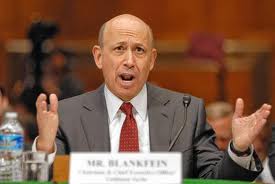
Lloyd Blankfein testifies that he deserves every damn penny 
Goldman Sachs pays him for screwing investors.

(This is from 2013)  The current  attack on public schools had its beginnings in the financial crisis of 2008. At that time the blame for the economic woes of the nation had appropriately been pinned on the financial games and the players within the investment community. Everybody knew whose fault it was and that the people to blame had made out very well at the country’s expense. There were congressional hearings, the country was hopping mad, and it was about time-thank you very much.
Unfortunately, the tone of the game players was not apologetic, in fact it was dismissive. You got the feeling watching that they felt put out by this congressional hearing silliness, and that the way they do business is the industry standard…a “ya pays yer money and ya takes yer chances” midway challenge. Little time was spent dealing with the fact that as industry insiders, the heads of big banks and finance industry insiders had not only been instrumental in designing the rules to be almost impossible to understand, they had designed it so they would win even when their customers and the economy lost.
So we all lost. “Too big to fail” meant incredible amounts of taxpayer money went to bail out and prop up the institutions that had already abused their position and our trust. The Emergency Economic Stabilization Act (2008) authorized the U.S, Treasury to spend up to $700 billion to buy up distressed assets from financial institutions that found themselves heavily leveraged in a failing market. Those funds were then redirected to inject capital directly into those institutions. Finding themselves flush with taxpayer cash one of the first things they did was pay out executive bonuses. (Los Angeles Times, July 2010)

(A couple tidbits from that L.A. Times story):

  • The Obama administration’s pay czar on Friday came to the same conclusion about fat Wall Street bonuses that average Americans have already reached: There’s no logic behind them, except greed.
  •  There’s simply no justification for multimillion-dollar bonuses that are paid out to people who were irresponsible,” said Rep. Peter Welch (D-Vt.), who this year proposed legislation levying a tax on bonuses of more than $50,000 at TARP recipients. The money would be used to increase loans for small businesses.


But this criticism and attention (and outrage?) dissipated quickly. When the occasional hard question about incredible salaries and bonuses paid to top executives in the financial sector arose, the response had something to do with the necessity to pay competitively in those fields to attract talent.

A good question would be talent to do what?

“The anger at these corporate subsidies was justified because breaks like these are a symbol of a budget process designed to shift money and power to people who already have too much of it”

Ironically, public workers during this time came under attack for their salaries, benefits and pensions. It was the only move that could be made when it had become clear that policy makers were either unable/unwilling to address, or culpable in the abuses of our economy. Someone had to fry, and public workers with the pensions that were not only an obligation-a debt to be paid,  but a source of play-money were a strategically smart target.  And this is one of the most vital things to keep in mind:

As average Americans struggle more and more financially, a very purposeful effort has been made to avoid contrasting the wages and benefits of public employees with the segment of the upper class that controls an astronomical amount of wealth, continues to see its fortunes grow, and controls policy. Instead, the powerful have used the media to make the comparison between public workers and the “average American worker” who has struggled with stagnant or declining wages on an economic playing field tilted towards the wealthy. For the wealthiest, fostering resentment and suspicion between the classes below them has been their solution  to the potential danger that those citizens might unite with an agenda of social justice and equity.

Our Present Situation

   The promise of “hope and change” that we had been sold by candidate Obama has vanished in swirl of bailouts and an assault on public workers. Suddenly the public is responsible for repairing the damage done by the irresponsible behaviors within the banking, mortgage and investment community. The loss of jobs; the loss of value in our homes; the difficulty in securing financing for the simple projects or possessions that the average American hopes for: a new car; a home equity loan or refinancing… Portraying public workers and public schools as the significant economic burden worked as a blame shift away from the true culprits while the myths of  investors and job creators went only briefly examined. Time and time again politicians called for that “shared sacrifice” in these trying economic times-but they weren’t usually speaking to the top 1-2 percent. They were signaling to everyone else that they would need to tighten their belts.

Shared sacrifice, really?

These calls for shared sacrifice, criticisms of public workers pay, doomsday prophecies regarding social security…all  have been echoed repeatedly by news pundits with little real connection to the majority of citizens already victimized-now being told they should accept being further disrespected.

And more often than not, the word “unions” is attached to the narrative as if it is at best a quaint but outdated concept-at worst a parasitic scourge and job-killer. Even gentler assessments of unions and their purpose miss the point.

“The struggle between teacher’s unions and conservative think tanks to influence educational policy is clearly a key battleground in the context of school reform.” (Neoliberalism in the classroom: The political economy of school reform in the United States)

It isn’t about influencing “educational policy”.

In the same way that teachers and schools are supposed to be apolitical in the way they deliver an education and support learners inside the school and the school day, politicians should refrain from assuming an understanding of the job of teaching that they have not earned. It’s about professional autonomy and the difference between a mission statement for teaching that we can all agree on, and one that is either loudly ill-defined or silently shameful.

Common Core, College, Career? Too Many C’s!

From 2013

I have always said that common core standards are a good idea, for some consistency and continuity. I’m not sure that they are always developmentally appropriate at the younger years, and the “college and career” stuff is a starry-eyed, back-handed slap of an accusation that comes without the conversations:

1) Careers?!? What careers? We are not long off a Clinton-to-Bush run where our leaders more or less told us that good jobs were gone, retraining and acceptance of less might be the lot of a lot of us, and a town hall where Bush II just didn’t get it when a clearly well spoken and educated, almost middle-aged mother lamented the need to work three jobs just to make ends meet.

Bush: “Three jobs? That’s truly American!”
The movies really do get it right once in a while: “If you build it, they will come.” When “job creators and investors” really did, and supported the nation/workers/economy that gave them investor/creator powers…our schools churned out workers that participated, and kids who went to college were ready. The investors creators have turned to hoarders in a speculation based economy and now they are speculating on the value of people, their public institutions, and finding a way to restrain and milk them on their public-to-private farm. If good jobs existed, parents would be working, feeding, loving, preparing students to succeed.


2) College? What exists after that would pay back the Sallie-Mae master? Not only that, but are we really going to pretend that so many American students are ready for the rigors of college level study? Are we instead going to alter “college” into a costly vocational/trade-prep option for some, or are we going to honestly look at the fact that we push more students onto the college path than we really should, that the payback on that investment is harder to find these days, and that negative comparisons to other systems around the world (where students are more filtered along the path to higher education) is simply not fair?

So…Common Core? I say okay. Wrap it around a turd sandwich that places the “no excuses” blame on teachers for not healing an economy wrecked by the same crew forcing the standards and test-based reform on us all (except for their privileged children)? No way…at least not quietly.